
Many vehicle owners ask who makes NAPA engine oil. They want to know who crafts the formula, bottles it, and backs its claims.
This guide clears up that question and helps you feel confident about your oil choices.
We’ll walk through the manufacturer behind the product, how it is made, what to expect in terms of performance, and how it compares to other oils on the market.
The Brand Behind the Label
When you pick up a bottle of NAPA engine oil, the brand you see is NAPA. What you might not see is that the actual formulation and production come from another company. According to NAPA’s European site: “NAPA Oils and Fluids are developed by leading oil manufacturer Valvoline.”
This means that while NAPA is the brand on the shelf, Valvoline handles much of the technical development and manufacturing. This partnership gives NAPA access to proven lubricant technology.
How the Manufacturing Partnership Works
The way this works is simple: NAPA partners with Valvoline to produce its engine oils. For instance, recent news shows that Valvoline has supplied the parent company of NAPA with lubricants for more than 50 years, under a formal partnership.
In practice, that means when you buy NAPA engine oil, you’re likely getting a product that shares many components with Valvoline’s own offerings — though it may be branded differently and packaged under NAPA. Many forum users have noted this equivalence.
Why It Matters to Vehicle Owners
Choosing engine oil isn’t just picking a bottle off the shelf. The right oil helps an engine run smoother, last longer, and perform better under stress. When you understand who makes NAPA engine oil, you gain trust in the product.
Knowing that Valvoline backs the formula means you get the benefits of a well‑known lubricant maker, even when buying through a different brand. This gives you assurance about quality and reliability.
Key Features of NAPA Engine Oil
Here are three important benefits you’ll get with a quality engine oil from this partnership:
- Strong protection against wear, especially in hot or hard‑driving conditions.
- Good cold‑start performance, meaning the oil flows well when the engine is cold.
- Compatibility with many vehicle types, from older cars to modern engines.
These features show that NAPA engine oil is more than just a budget label it draws on established oil technology.
NAPA vs Other Common Engine Oils
Here’s a detailed table comparing key aspects of NAPA engine oil with Valvoline’s own brand and a generic budget brand. This helps you understand what you’re getting.
| Feature | NAPA Engine Oil | Valvoline Brand Oil | Budget Store‑Brand Oil |
| Manufacturer / Developer | Produced under NAPA brand, developed by Valvoline | Valvoline develops and sells under its own label | Developed by large refiner, lesser known branding |
| Brand Recognition | Strong aftermarket parts brand (NAPA Auto Parts) | Well‑known lubricant specialist | Limited branding, less marketing |
| Formulation Quality | High, meets modern specs | Highest, premium line | Basic, meets minimal specs |
| Price Level | Moderate | Higher | Lower |
| Packaging & Availability | Widely in NAPA stores and online | Many outlets, specialty too | Big box stores, discount chains |
| Warranty / Support | Supported by NAPA network and Valvoline technology | Premium support, longer history | Limited support |
| Variety of Oil Types | Conventional, synthetic blend, full synthetic | Many choices, premium grades | Fewer choices, mostly conventional |
| Technical Partnership | Clear: NAPA/Valvoline partnership | No third‐party label | May be private label from large refiner |
| Best For | Everyday drivers wanting solid value and performance | Enthusiasts, premium protection | Budget conscious drivers, less demanding conditions |
Choosing the Right Viscosity and Type
Your car’s manual will tell you what viscosity grade to use (for example 5W‑30 or 10W‑40). NAPA engine oil offers several types: conventional, blended, and full synthetic. If you drive in extreme cold, tow heavy loads, or have a high‑performance vehicle, a full synthetic is the smarter choice. For normal driving in mild climates, conventional or blend usually works fine and costs less.
Myths and Facts
There are a few rumors out there. One myth: NAPA oil is identical to another brand’s oil but just cheaper. While there are similarities (same developer, many shared components), the formulas and packaging can differ.
Fact: NAPA oil does carry the stamp “Manufacturer: Valvoline” on some product listings. So you’re not buying from an unknown or obscure maker you’re buying from a trusted source.
When to Change Your Engine Oil
Regular oil changes keep engine parts from wearing and keep the motor running cooler. For typical driving, changing oil every 5,000 to 7,500 miles is a good rule. For heavy use (towing, hot climate), change sooner.
Also, always replace the oil filter when you change oil. Using quality oil like NAPA engine oil helps but the filter plays a key role in catching contaminants.
Final Thoughts
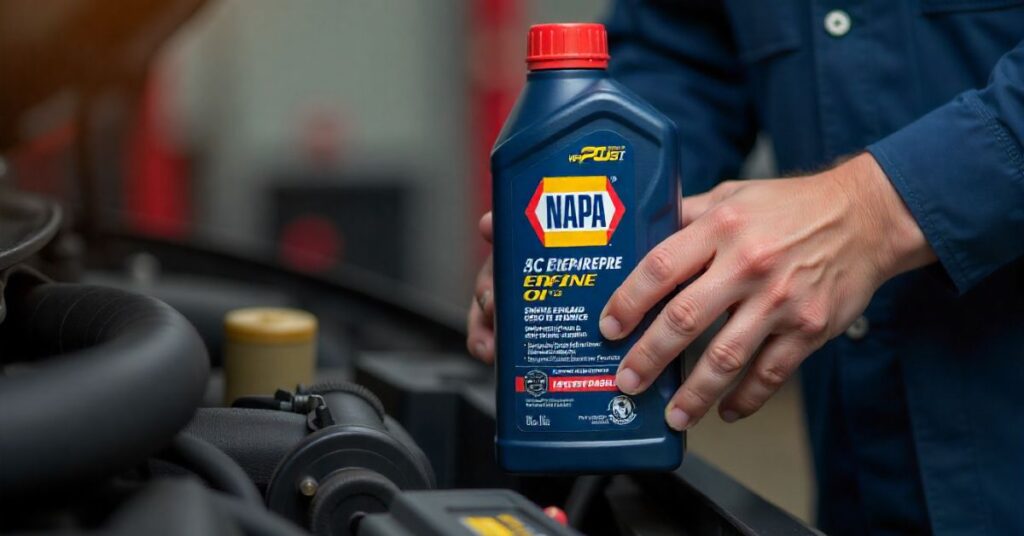
In summary, when you ask who makes NAPA engine oil, the short answer is that NAPA partners with Valvoline to develop and manufacture the product. This gives you the backing of a major lubricant expert along with the convenience of a strong parts brand.
By choosing the right type and grade, and changing oil at appropriate intervals, you’re supporting your engine’s health, mileage and performance. Count on value and reliability when you select this line.
Conclusion
NAPA engine oil is crafted in partnership with Valvoline, ensuring high-quality performance, reliability, and protection for your engine. Understanding who makes it gives you confidence in its formula and trust in the brand. By choosing the right type and grade, following recommended oil change intervals, and using quality products, you can keep your engine running smoothly, extend its life, and enjoy optimal performance. NAPA engine oil combines the expertise of a leading manufacturer with the convenience and availability of a trusted parts brand.
FAQs
Q1: Is NAPA engine oil made by Valvoline?
Yes. NAPA’s website states that its oils are developed by Valvoline and product listings identify Valvoline as the manufacturer.
Q2: Can I use NAPA engine oil in any car?
Yes, as long as you pick the correct grade (viscosity) and type (conventional vs synthetic) that matches your vehicle’s requirements.
Q3: Does using NAPA engine oil void my vehicle’s warranty?
No. The key is to meet or exceed the specifications your vehicle manufacturer requires and to keep proper records of oil changes.
Q4: How often should I change NAPA engine oil?
For most driving you can change it every 5,000–7,500 miles. If you drive under severe conditions (lots of stop‑and‑go, towing, very hot/cold climates), change it more often.
Q5: Is full synthetic better than conventional in NAPA’s line?
Yes, full synthetic offers better protection, flow at low temperatures, and longer life. But for regular driving in mild conditions, conventional or blend oil is sufficient and cost‑effective.
Noah Theo is the World Best Article Writter. Top Ranked Articles, Informative Articles, Unique Content Articles. All Articles are Written by Noah Theo..